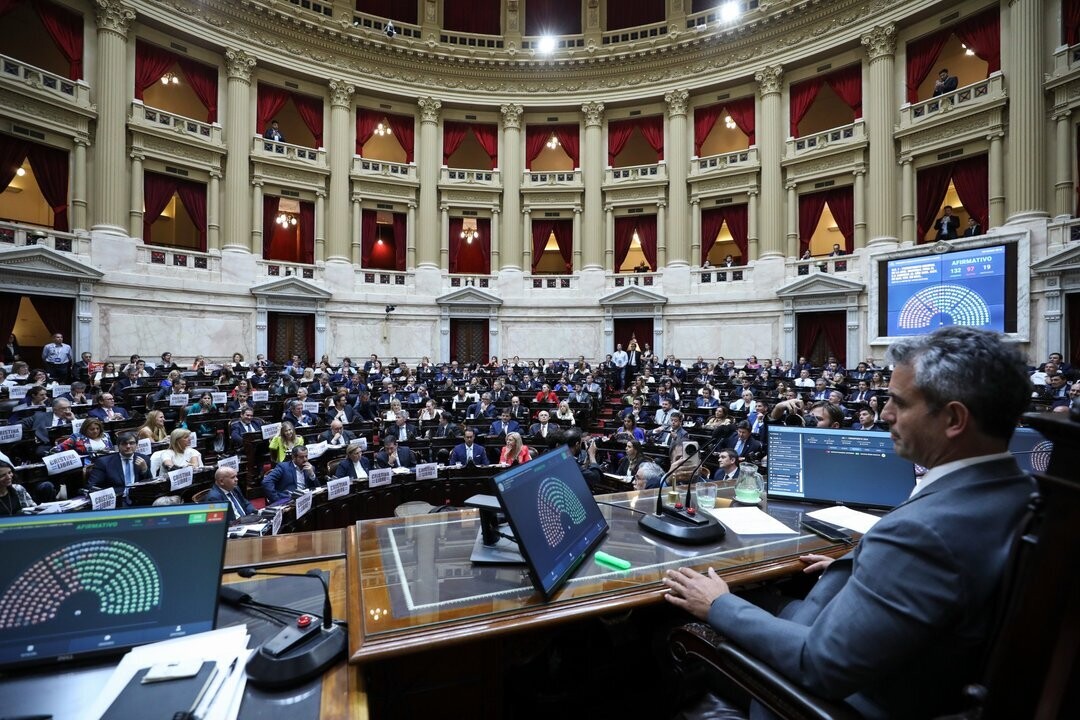
«Nobody is a libertarian for free», a national deputy from Unión por la Patria mocked in a dialogue with the Argentine News Agency. In reality, the problem was not so much a financial one this time, but rather the drafting of the article: putting so many reforms in a single chapter was a double-edged sword because it prevented deputies from diversifying their vote, approving some measures and rejecting others. In the dilemma of having to vote «yes or no», as summarized by Sergio Massa in the last presidential debate, many deputies chose «no». «The government's actions are very amateurish. The same thing happened with the Bases Law. They negotiate little and poorly, and they are bad at strategy,» the consulted source from Unión por la Patria pointed out. The vote at 3 a.m. for the positions in the General Audit Office of the Nation, between roosters and midnight, so that the population would not notice the corporate agreements of a pure «caste», was the most irrefutable proof that the government had to pay favors in exchange for support for the Budget. Behind the curtains of the chamber, waiting for the order to be sworn in as a national deputy, was Salta native Pamela Calletti, a former national deputy for Federal Innovation, cited after midnight to finalize the distribution of positions. The government's clumsiness was such that it did not even ensure that all the votes from Salta Governor Gustavo Sáenz went where they were supposed to. Pablo Outes and Yolanda Vega voted with the ruling party to shield Article 75, but Bernardo Biella voted with the opposition. Despite this, Calletti was sworn in as the new general auditor and will receive a millionaire salary that doubles what she earned as a national deputy just days ago, when her term in Congress ended. Among the governors, the government received positive responses from those of Misiones and San Juan, as well as the radical Alfredo Cornejo from Mendoza, but the three Catamarca deputies of Raúl Jalil voted against, as did the Tucuman deputies of Osvaldo Jaldo and the Neuquén deputy Karina Maureira, who reports to Rolando Figueroa. On top of that, the Corrientes UCR deputy Diógenes González, aligned with Governor Gustavo Valdés, voted with the opposition, while two Chaco radicals of Leandro Zdero abstained (Gerardo Cipolini and Darío Schneider) and only one, Guillermo Agüero, supported the ruling party. For the MID, Oscar Zago and Eduardo Falcone voted in favor of the budget in general, but then were absent for the vote on chapter 11. Álvaro González from the PRO did the same, while Banfi voted for the budget in general and then marked her vote against the chapter that repealed university and disability laws. The government first won the vote on the budget in general, but the opposition took its revenge by defeating an entire chapter of the bill, which included the famous Article 75 that repealed the laws on university and disability funding. Due to the unexpected outcome, which caused a war-like celebration in the chamber, the opposition left with the best feelings, while the ruling party, overwhelmed, sank into a sea of tribulations and places its only hope on restoring the suppressed part in the Senate. The government moved heaven and earth to shield the chapter, and until the last moment, the Minister of the Interior, Diego Santilli, parked his sleigh at the Congress to distribute Christmas gifts to the servile governors in the form of ATN, which the real opposition saw as «extortion». The ruling party sinned from excessive ambition and political amateurism by concentrating many of the fiscal savings measures in a single chapter. In addition to the repeal of the disability and university laws, it included the restriction of the cold zone for gas users, which will remove subsidies from some regions with harsh climates. It also included the removal of the automaticity in the updates of ANSES benefits such as family allowances, AUH and Pregnancy Allowance, to give discretion to the increases. As a lure to get some deputies to vote for this type of unpopular measures, it included in the same chapter the revenue sharing with the City of Buenos Aires. It believed that the votes of the PRO (very susceptible to the finances of the capital city) would be enough, but it was asking too much of other «more expensive» allies, like the governors, who were not going to sacrifice themselves like that. Even the Buenos Aires radical Karina Banfi, a habitual subordinate to the government, backed down when they put her in the position of turning her back on the disabled and universities. It's incredible that these things keep happening to them.